Yea, and All That Will Live Godly in Christ Jesus Shall Suffer Persecution by Debbie Harris

Tags

, , ,

“Yea, and All That Will Live Godly in Christ Jesus Shall Suffer Persecution” is a seven-stanza hymn-portrait of the underground, biblical church in places where following Christ is illegal and dangerous.

It begins with quiet, dawn gatherings of ordinary believers who share simple bread and water, meeting in secret because their faith has marked them for arrest. They draw strength from the same Scriptures that sustained Peter, Paul, and Daniel in prison and fire.

The poem traces their losses (homes, jobs, freedom, even life) and their strange gains: deeper joy, unbreakable unity, and a gospel that spreads faster the harder it is crushed. Like wheat that multiplies when ground, like seed that sprouts when buried, the persecuted church becomes more truly itself under pressure.

We see prisoners preaching to their guards, widows giving their last coins with laughter, teenagers smuggling pages of the Bible, and entire families refusing to bow to the state’s idols. Their love for enemies, their refusal to hate, and their calm certainty of resurrection confound their persecutors.

The closing stanzas lift the eyes forward: every empire that hates Christ will one day collapse like Babel. The same Jesus who had no place to lay His head will return with nail-scarred hands to gather His hidden, hunted flock. Until then, the church endures by Scripture alone, saved by Christ alone, kept by grace alone, clinging to the promise that faithfulness unto death receives the crown of life.

The poem is both lament and defiant celebration: persecution is normal, promised, and ultimately powerless against the church that belongs to the risen Lamb.

Beneath the radar of the watching state,
they meet at dawn before the soldiers wake,
a handful sharing bread upon a plate,
a cup of water for the Master’s sake.
No steeple marks the place, no bell is rung—
only the Word, alive on every tongue.

They read where Peter wrote from prison chains,
where Paul counted it joy to bear the scar;
they hear the Lord who stills the wind and reigns
though doors are locked and iron bars stand far.
Like Daniel in the den, like saints of old,
they trust the God who turns the fire cold.

Foxes have holes, the birds have nests, He said—
but not the Son of Man, and not His own;
so now they wander, refuge-less, instead
of bowing to the image on the throne.
They lose their homes, their jobs, their right to speak,
yet find the kingdom buried in the meek.

They are the remnant promised long ago,
the little flock the Father calls by name;
the bruised reed unbroken, the faint glow
that will not quench until the Day of flame.
The more the dragon rages, coils, and strikes,
the more the church becomes what Jesus likes.

See how they love the ones who drag them off,
how prisoners preach to guards inside the cell,
how widows give their last two coins and laugh
because the gospel cannot be withheld.
Their blood is seed; their silence shouts abroad—
the gates of hell shall never hold this squad.

O church of Scripture only, Christ alone,
by grace through faith, to God be glory still;
you walk the narrow road the world disowns,
yet every step fulfills the Father’s will.
The scroll is open, and the Lamb stands sure—
His wounded hands have made the triumph pure.

And when the kingdoms of this age collapse
like towers of Babel crumbling into sand,
the King will ride with lightning in His steps
and call His hidden ones with nail-scarred hand.
Then every secret prayer, each whispered verse,
will roar like thunder through the universe.

Until that morning, faithful, suffering bride,
keep holding fast the Word of life you read;
the world may scorn, imprison, and deride—
but Jesus lives, and He is coming with speed.
Your names are graven where no sword can reach,
sealed by the Spirit, kept beyond all breach.
Amen. Come, Lord Jesus. Even so—come.

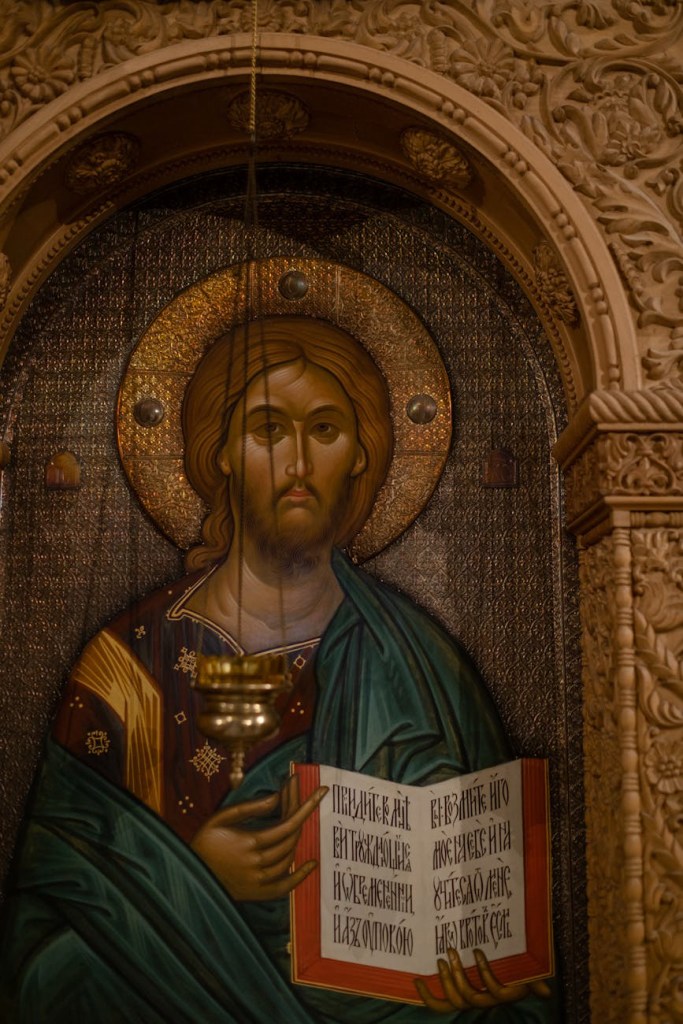
Every Prayer A Sacred Poem To The Divine Ear by Debbie Harris

Tags

, ,

Every prayer is a sacred poem to God,
Though penned in haste on trembling air,
In fragments torn from flesh and blood,
Yet flawless in the sight of prayer.

The miser’s coin that clinks too late,
The harlot’s tear upon the floor,
The thief’s last breath beneath the weight
Of nail and spear and open door.

The scholar’s doubt that kneels at length,
The leper’s groan outside the gate,
The proud man’s silence, stripped of strength,
All enter heaven’s mercy-seat.

No line is lost, no sigh too small;
The stammered word, the wordless dread,
The broken meter of our fall
Becomes the psalm that angels read.

For He who spoke the worlds in rhyme
Delights in every ragged scroll;
He gathers every trembling line
And binds them in His heart made whole.

Therefore let fall the heart’s crude art,
Unpolished, bleeding, unafraid:
Whether the answer granted be “Yes” or a tender “No,”
Every prayer ascends as a sacred poem to the Throne of God,
For all is done in love, and the best is only given
To the child of God—no matter if the answer is yes or no.

Every Prayer Ascends as a Sacred Poem to the Throne of God by Debbie Harris

Tags

, ,

Every prayer is a sacred poem to God,
Though penned in haste on trembling air,
In fragments torn from flesh and blood,
Yet flawless in the sight of prayer.

The miser’s coin that clinks too late,
The harlot’s tear upon the floor,
The thief’s last breath beneath the weight
Of nail and spear and open door.

The scholar’s doubt that kneels at length,
The leper’s groan outside the gate,
The proud man’s silence, stripped of strength,
All enter heaven’s mercy-seat.

No line is lost, no sigh too small;
The stammered word, the wordless dread,
The broken meter of our fall
Becomes the psalm that angels read.

For He who spoke the worlds in rhyme
Delights in every ragged scroll;
He gathers every trembling line
And binds them in His heart made whole.

Therefore let fall the heart’s crude art—
Unpolished, bleeding, unafraid—
Every prayer is a sacred poem to God,
And every Christ- centered poem is a prayer.

Oh The Blessed Cross Of Jesus Christ Is The Royally Redeemed Ceaseless Glory by Debbie Harris

Tags

, , , , , , , , ,

Oh the blessed Cross of

Jesus Christ is our cesseless

glory, our redemptive story!

He alone is our peace, our

Salvation, our victorious,

hope-filled, majestic, loving,

merciful, powerful, transforming

King of Kings and Lord of Lords!

Therefore royals of Jesus Christ,

God forbid that I should glory

save in the cross of Jesus Christ,

by whom the world is crucified

unto me, and I unto the world.

Praise the Lord! Laud him

all you peoples of the earth!

A Hymn To The Beauty To Our Lord And Savior Jesus Christ, King Of Kings And Lord Of Lords by Debbie Harris

Tags

, , , ,

The poem is a reverent contemplation of the surpassing, inexhaustible beauty of Jesus Christ. It declares that no human words, art, or lifespan can ever fully capture His loveliness: His face outshines the dawn, His eyes hold depths greater than the sea, and even the fairest flowers and the sun itself grow dim before Him.

His pierced hands and sacred wounds, once marks of suffering, now radiate eternal glory and serve as the very gates of heaven. Angels and elders in heaven veil their faces and cast down their crowns in ceaseless worship of the Lamb who was slain.

Yet on earth, time is too short and mortal hearts too limited to comprehend or express even a fraction of this beauty. A thousand ages would still leave the soul stammering in awe.

The closing strophe turns to hope: although no one sees Him in fullness now, to all who are born again God has promised the day when faith will become sight. Then, face to face with the unveiled Christ, they will at last drink in the complete splendor of His beauty and love Him perfectly forever.

In mortal sphere where fleeting shadows fall,
There walks a Form that holds the heart in thrall;
No tongue of man, though eloquent it be,
Hath power to speak the tenth part of His beauty.

His countenance is fairer than the morn
When first it gilds the dew-besilvered thorn;
His eyes are deeper than the midnight sea,
Yet soft as light that breaks on Galilee.

The rose of Sharon pales before His cheek,
The lily of the valley seems less meek;
The sun itself, in all its golden pride,
Doth veil its face when He is glorified.

His hands, once pierced, now bear the radiant scars
That shine more bright than all the evening stars;
His wounds, once red with sorrow’s bitter wine,
Are now the gates whereby the soul divine
Doth enter bliss and drink eternal day,
Where grief is lost and tears are wiped away.

The seraphim before His throne fall low,
Veiling their wings in reverent glow;
The four-and-twenty elders cast their crowns
And chant new anthems to the Lamb that drowns
All lesser music in its boundless tide
Of love that flowed when on the Cross He died.

Yet mortal years are all too brief a span
To trace the glory of the Son of Man;
A thousand ages, bright as seraphs’ wings,
Would find the heart still poor and stammering.

O Beauty ancient, yet for ever new,
O endless Light that mortal eye ne’er knew
In fullness here; yet to the born-again
Thy promise stands, immutable, clear, and plain:
They shall behold Thy face in unveiled might,
And, ravished, drink the plenitude of light,
Where faith shall yield to sight, and sight adore
The Lamb upon the throne for evermore.

More to Be Desired Are They Than Gold,Yea, Than Much Fine Gold by Debbie Harris

Tags

, , , , ,

The poem is a single, soaring hymn of praise to the Holy Bible as the living, life-giving Word of God.

It begins with the human soul lying dead in the dust of sin and despair, then shows how the gentle rain of Scripture falls upon that dust and causes new life to spring forth, green, fragrant, and rejoicing.

From there it traces the entire pilgrimage of the believer:

  • The Bible becomes a chain of steady lamps along the dangerous, narrow path, turning midnight into morning.
  • Its promises taste sweeter than wild honey dripping from the rock.
  • When enemies weave nets of lies, Scripture flashes like a sword of fire and sets the captive free.
  • Before dawn, hungry souls rise to meet the Word and find fresh manna, warm and fragrant, every single morning.
  • The heart learns to love God’s commandments more than the richest king loves his glittering treasure, and living rivers burst forth within.
  • Finally, Scripture binds, seals, and nails the soul fast to God, transforming trembling sinners into joyful, unshakable trees planted by rivers of water, whose leaves never wither and whose fruit never fails.

The whole movement is one of resurrection, guidance, delight, deliverance, sustenance, and everlasting fruitfulness, all flowing from the open pages of the Holy Bible. It is a universal prayer that every heart on earth would come to love, trust, and live in this Word that is forever settled in heaven, more precious than thousands of pieces of gold and silver, and able to make the simple wise unto everlasting life.

In short: the poem celebrates the Holy Bible as the inexhaustible treasure that revives the dead, guides the lost, feeds the hungry, frees the captive, and keeps the redeemed forever alive in the presence of God.

Let every heart that once lay prone in dust
be raised beneath the gentle rain of Scripture;
the Holy Bible falls like mercy’s mist,
and withered ribs put on the green of life,
breathing the fragrance of a risen race.

Let every pilgrim faltering on the steep,
where pride’s loose stones betray the trembling foot,
behold the lamps of God’s own Word hung deep
along the narrow way; the sacred page
turns midnight into morning, and each step
rings clear upon the height with heaven’s light.

Let every tongue that hungers taste and say
how verses of the Holy Bible melt
more sweet than honey dripping from the rock;
one line, and barren souls become a sea
of golden wheat beneath a harvest moon,
where quiet winds of peace forever move.

When lying cords are woven through the gloom
to snare the innocent, let Scripture rise
like sudden sunrise on a blade of steel;
the nets fall black and burned, the captives rise
laughing beneath a sky the Word has flung
wide open with its everlasting light.

Before the lark awakes, before the dew
has vanished from the grass, let watchers keep
their silent vigil with the open Book,
and find warm manna broken in their hands,
fresh from the Holy Bible every dawn,
still fragrant with the breath of God Himself.

Let every heart love Scripture more than kings
love coffers heaped with gold and glittering stone;
let living waters from its pages leap
on crystal wings and sweep old sins away.

Bind every soul with cords no storm can sever,
seal every spirit on the arm of Love,
drive every thought like nails the Word drives home;
so shall the trembling stand in perfect peace,
and joy shall clothe them like a wedding dress.

For lo, the Holy Bible stands enthroned
in heaven’s height, a star no darkness dims;
and all who graft their lives upon its truth
become fair trees beside the river of God,
whose leaves shall never fade, whose fruit is sure
through summer’s blaze and winter’s longest night.

Amen.

We Receive a Kingdom That Cannot Be Shaken: A Hymn of Reverence, Gratitude, and Eternal Victory by Debbie Harris

Tags

, , , , , , ,

Rooted in Hebrews 12:28, the poem celebrates the staggering gift of an eternal, unshakable kingdom that believers are already receiving amid a world that is crumbling. Earthly empires rise in smoke, their crowns and scepters shatter, mountains melt, and graves claim every merely human glory; yet God’s people stand secure on Mount Zion, the city that cannot be moved.

The cross itself becomes the guarantee: the slain Lamb now reigns, His wounds transformed into royal jewels, and every scar a proof that this kingdom is forever “shake-proof.” Because Christ has triumphed over sin and death, His people live in confident hope, wearing an unseen crown and bearing the weight of coming glory even now.

The poem moves from awe-filled reverence (falling before a holy God) to exultant victory (rising to serve the King of Kings with trembling joy). It ends with a final, defiant hallelujah: while hell despairs and death lies crushed, the redeemed lift their voices in worship, tasting already the wine of endless days in the one realm that no power can ever overthrow.

In short, it is a song of majesty, unbreakable hope, and ultimate victory for all who serve the Lamb who was slain—the eternal King of Kings and Lord of Lords.

(Hebrews 12:28)

Therefore, since we are receiving
a kingdom that cannot be shaken—
let us be thankful,
and so worship God acceptably
with reverence and awe.

We stand on ground that will not yield,
while thrones of earth dissolve like mist;
the fires may roar, the mountains slide,
yet here our footing keeps its tryst.
No earthquake moves the city’s wall,
no tempest tears its banners down—
for we have come to Zion’s hill
and wear the Victor’s hidden crown.

The smoke of empires climbs and fades,
their iron scepters snap like reeds;
but mercy built our fortress here
on promises that never bleed.
The Lamb once slain now wears the scars
as royal jewels upon His breast—
and every wound that bought our peace
has made His kingdom shake-proof, blest.

So lift your heads, you blood-bought host,
the night is gone, the dawn is sure;
the trumpet soon will split the sky
and call the heirs to what endures.
With reverence deep and holy fire
we fall, we rise, we kiss the rod—
then stand to serve with trembling joy
the King of Kings, the Lord our God.

Let angels hush, let hell despair,
let death itself lie crushed and still;
we bear the weight of glory now—
a kingdom no grave ever will.
Come, take the cup, come wear the crown,
come taste the wine of endless days—
for we have seen the throne that stands
when every other throne decays.

Hallelujah to the Lamb,
Hallelujah to the King—
forever reigns the unshaken realm
where hope and majesty take wing.
Amen.

“Ye Shall Not Add… Neither Shall Ye Diminish”:A Cry Against the Alteration of God’s Holy Word by Debbie Harris

Tags

, , , ,

he poem is a fierce, urgent warning that the single most soul-destroying habit a person can adopt is to tamper with the Word of God (adding to it, subtracting from it, softening it, or reinterpreting it to suit human preference).

It portrays such alteration as a slow-acting but lethal poison: a tiny change (one jot, one tittle) seems harmless at first, yet it quietly corrupts the heart, removes the anchor of truth, and ultimately leaves the soul shipwrecked and estranged from God.

Modern attempts to “update” or “humanize” Scripture are exposed as proud rebellion: men making themselves kinder than God and forging a false mercy that becomes an eternal funeral pyre.

The closing charge is absolute: lay down the pen, touch not one syllable, stand in awe and trembling. Better to be broken by the unflinching rod of the true Word than to die smiling under a counterfeit gospel. The words of Scripture are settled forever; to meddle with them is to invite spiritual ruin.

  • Deuteronomy 4:2
    Ye shall not add unto the word which I command you, neither shall ye diminish ought from it, that ye may keep the commandments of the LORD your God which I command you.
  • Deuteronomy 12:32
    What thing soever I command you, observe to do it: thou shalt not add thereto, nor diminish from it.
  • Proverbs 30:5-6
    Every word of God is pure: he is a shield unto them that put their trust in him. Add thou not unto his words, lest he reprove thee, and thou be found a liar.
  • Joshua 1:7
    Only be thou strong and very courageous, that thou mayest observe to do according to all the law, which Moses my servant commanded thee: turn not from it to the right hand or to the left, that thou mayest prosper whithersoever thou goest.
  • Jeremiah 26:2
    Thus saith the LORD; Stand in the court of the LORD’s house, and speak unto all the cities of Judah, which come to worship in the LORD’s house, all the words that I command thee to speak unto them; diminish not a word.
  • Matthew 5:18-19
    For verily I say unto you, Till heaven and earth pass, one jot or one tittle shall in no wise pass from the law, till all be fulfilled. Whosoever therefore shall break one of these least commandments, and shall teach men so, he shall be called the least in the kingdom of heaven: but whosoever shall do and teach them, the same shall be called great in the kingdom of heaven.
  • Galatians 1:8-9
    But though we, or an angel from heaven, preach any other gospel unto you than that which we have preached unto you, let him be accursed. As we said before, so say I now again, If any man preach any other gospel unto you than that ye have received, let him be accursed.
  • Revelation 22:18-19
    For I testify unto every man that heareth the words of the prophecy of this book, If any man shall add unto these things, God shall add unto him the plagues that are written in this book: And if any man shall take away from the words of the book of this prophecy, God shall take away his part out of the book of life, and out of the holy city, and from the things which are written in this book.

Beware the hand that dares to bend
The living Word to private end;
No poison drips so slow, so sure,
No blade cuts deeper, none more pure
Than subtle change of what God said,
A shifted line, a verse half-dead.

The soul that drinks that altered stream
Will sicken in a silent dream;
First taste seems sweet, the change so small,
A jot, a tittle, that is all.
Yet day by day the fever grows,
Till truth lies bleeding no one knows.

Men call it wisdom, call it light,
To trim the Word for modern sight;
They soften threats, they blunt the rod,
And crown themselves more kind than God.
But mercy forged in human fire
Becomes the soul’s eternal pyre.

I’ve seen the wreck on every shore—
The heart that thought it needed more
Than what was written, plain and clear;
It added comfort, stifled fear,
Then woke to find the anchor gone,
And every star of guidance none.

O trembling hand, lay down the pen,
Let not one sacred syllable bend!
The Book that thunders, “Do not add,”
Still holds the power to make hearts glad
Or break them on the whetstone true;
Its ruin is its healing too.

Touch not the Word, though curiosity burn;
The soul that tampers shall itself be torn.
Better to bleed beneath the rod
Than smile forever estranged from God.
Stand trembling, stand in dust and awe—
The Word is settled. That is all.

To Pray The Impossible by Debbie Harris

Tags

, , , , , ,

The poem portrays praying for the impossible as a daring, almost reckless spiritual adventure. It is an act of extreme faith: standing at the absolute edge of what can be, flinging fragile hope into an abyss, walking a razor-thin line between despair and miracle .Rather than a polite request, such prayer is depicted as trespassing into forbidden territory—barging into heaven’s locked garden, disturbing the sleep of the divine, and demanding what was never meant to be given. Yet the tone is wondrous, not blasphemous: the impossible is personified as something curious, half-awake, even amused by the audacity.In the end, when the impossible actually happens, the breakthrough is overwhelming and humbling. The speaker realizes the true thrill was never in receiving the answer, but in the wild courage to ask for a road where no road could exist. The poem celebrates the sheer adventure of radical, divine and Holy faith.

To pray the impossible is an adventure indeed
a barefoot crossing of a sea that has no other side
where the wind tastes of salt and unfinished psalms
and every heartbeat is a drumbeat against the ribs of God.

You stand at the edge of what cannot be
palms raw from holding questions too heavy for hands
whispering into the dark that refuses to answer back
yet the dark leans closer, curious, almost tender.

It is to fling your small coin of faith
into a night with no bottom
and hear, far below, the faint metallic ring
of something vast turning over in its sleep.

To pray the impossible
is to walk the narrow ridge between despair and dawn
where miracles grow like frost-flowers on the breath
delicate, lethal, unbearably bright.

You become the trespasser on a shore the tide forgot
reaching for fruit that hangs just beyond the stars
and the angels, instead of turning away
lean in, half-smiling, as if they too
have been waiting to see what happens next.

And when the impossible finally cracks open
like a sunrise inside your chest
you will not say “I knew it all along”
you will only fall to your knees
laughing and weeping at once
because the adventure
was never about arriving
but about daring to ask
for a road
where no road
could ever be.

A Sonnet In Awe Of God’s Provision by Debbie Harris

Tags

,

The sparrow rides a wind it never earned,
Its wings edged bright with light not of its own;
A widow’s jar still whispers flour, unturned,
The cruse bleeds oil where want should overthrow.

From flint-split heart the rock remembers grace,
Manna descends like mercy’s slow refrain;
Lions grow tame before the psalmist’s face,
The fourth walks fire and cools the furnace flame.

The barren womb breaks sudden into song,
The prisoner’s chains slip off like outworn skin;
The leper reaches—finds his hand made strong,
New flesh where rot had gnawed its way within.

We, beggars waking rich, stand stunned and dumb:
Love’s scandalous arithmetic o’ercomes.