
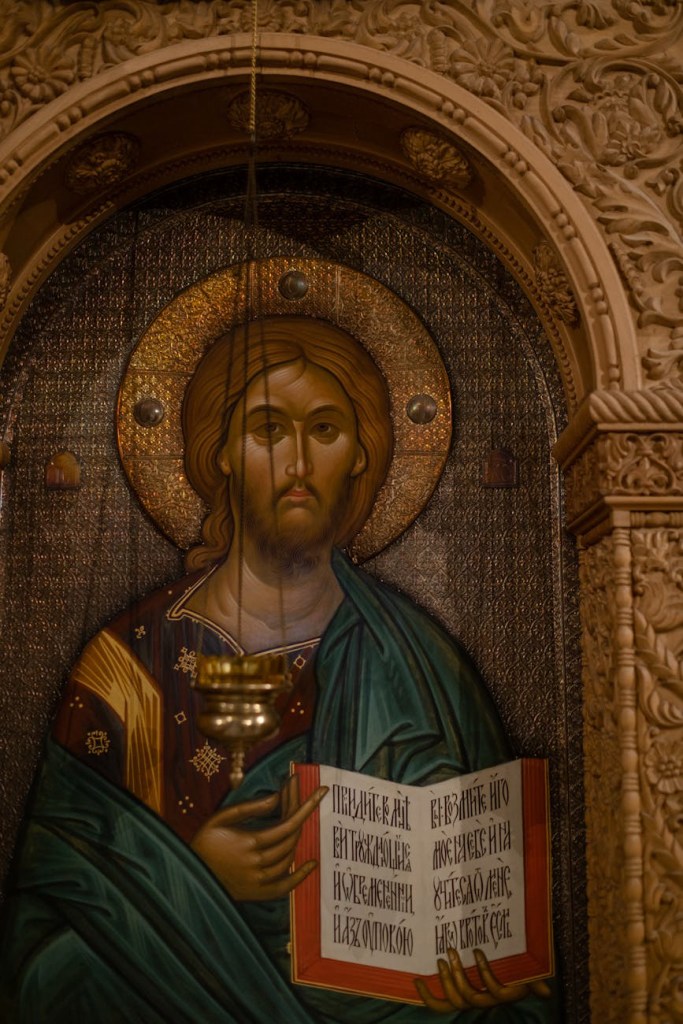
The poem is a reverent contemplation of the surpassing, inexhaustible beauty of Jesus Christ. It declares that no human words, art, or lifespan can ever fully capture His loveliness: His face outshines the dawn, His eyes hold depths greater than the sea, and even the fairest flowers and the sun itself grow dim before Him.
His pierced hands and sacred wounds, once marks of suffering, now radiate eternal glory and serve as the very gates of heaven. Angels and elders in heaven veil their faces and cast down their crowns in ceaseless worship of the Lamb who was slain.
Yet on earth, time is too short and mortal hearts too limited to comprehend or express even a fraction of this beauty. A thousand ages would still leave the soul stammering in awe.
The closing strophe turns to hope: although no one sees Him in fullness now, to all who are born again God has promised the day when faith will become sight. Then, face to face with the unveiled Christ, they will at last drink in the complete splendor of His beauty and love Him perfectly forever.
In mortal sphere where fleeting shadows fall,
There walks a Form that holds the heart in thrall;
No tongue of man, though eloquent it be,
Hath power to speak the tenth part of His beauty.
His countenance is fairer than the morn
When first it gilds the dew-besilvered thorn;
His eyes are deeper than the midnight sea,
Yet soft as light that breaks on Galilee.
The rose of Sharon pales before His cheek,
The lily of the valley seems less meek;
The sun itself, in all its golden pride,
Doth veil its face when He is glorified.
His hands, once pierced, now bear the radiant scars
That shine more bright than all the evening stars;
His wounds, once red with sorrow’s bitter wine,
Are now the gates whereby the soul divine
Doth enter bliss and drink eternal day,
Where grief is lost and tears are wiped away.
The seraphim before His throne fall low,
Veiling their wings in reverent glow;
The four-and-twenty elders cast their crowns
And chant new anthems to the Lamb that drowns
All lesser music in its boundless tide
Of love that flowed when on the Cross He died.
Yet mortal years are all too brief a span
To trace the glory of the Son of Man;
A thousand ages, bright as seraphs’ wings,
Would find the heart still poor and stammering.
O Beauty ancient, yet for ever new,
O endless Light that mortal eye ne’er knew
In fullness here; yet to the born-again
Thy promise stands, immutable, clear, and plain:
They shall behold Thy face in unveiled might,
And, ravished, drink the plenitude of light,
Where faith shall yield to sight, and sight adore
The Lamb upon the throne for evermore.
 Passionately Pursuing Christ